
The Athletic Body: Form, Movement, and Photography
The Athletic Body: Form, Movement, and Photography
From classical sculpture to modern photography, the athletic body has remained one of the most enduring subjects in visual culture.
The Body as Ideal
The athletic body has long occupied a central place in the history of art. In ancient Greece, representations of athletes were not merely depictions of physical strength but expressions of harmony, proportion, and balance. Sculptures such as the Doryphoros by Polykleitos established a visual language based on equilibrium and controlled tension. Through the principle of contrapposto, the body appeared both stable and dynamic, animated by a subtle shift of weight.
In this tradition, the athlete became more than a subject; it became a structure through which artists could explore the relationship between posture, balance, and spatial harmony.
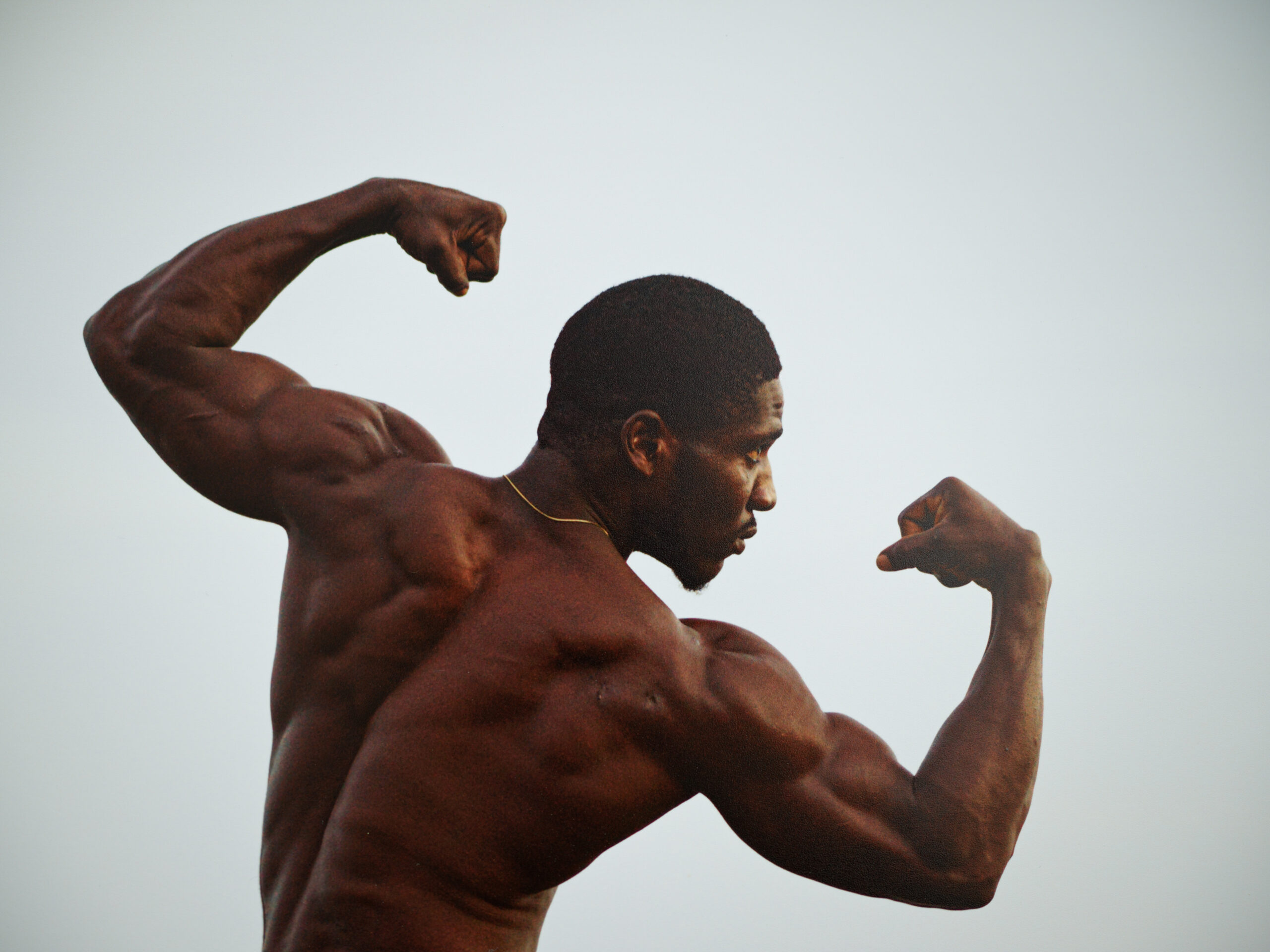
close up of 'Power Beach_Side2', 2026
The Body and Movement
With the invention of photography in the nineteenth century, the study of the body entered a new phase. The camera offered artists and scientists alike a tool capable of analysing movement with remarkable precision.
Pioneers such as Eadweard Muybridge and Étienne-Jules Marey used sequential photography and chronophotography to break down motion into a series of images. Their experiments revealed the mechanics of movement, how limbs extend, how balance shifts, and how the body moves through space.
Although conceived as scientific investigations, these studies had a profound influence on visual culture, demonstrating photography’s unique ability to transform a fleeting movement into an image.
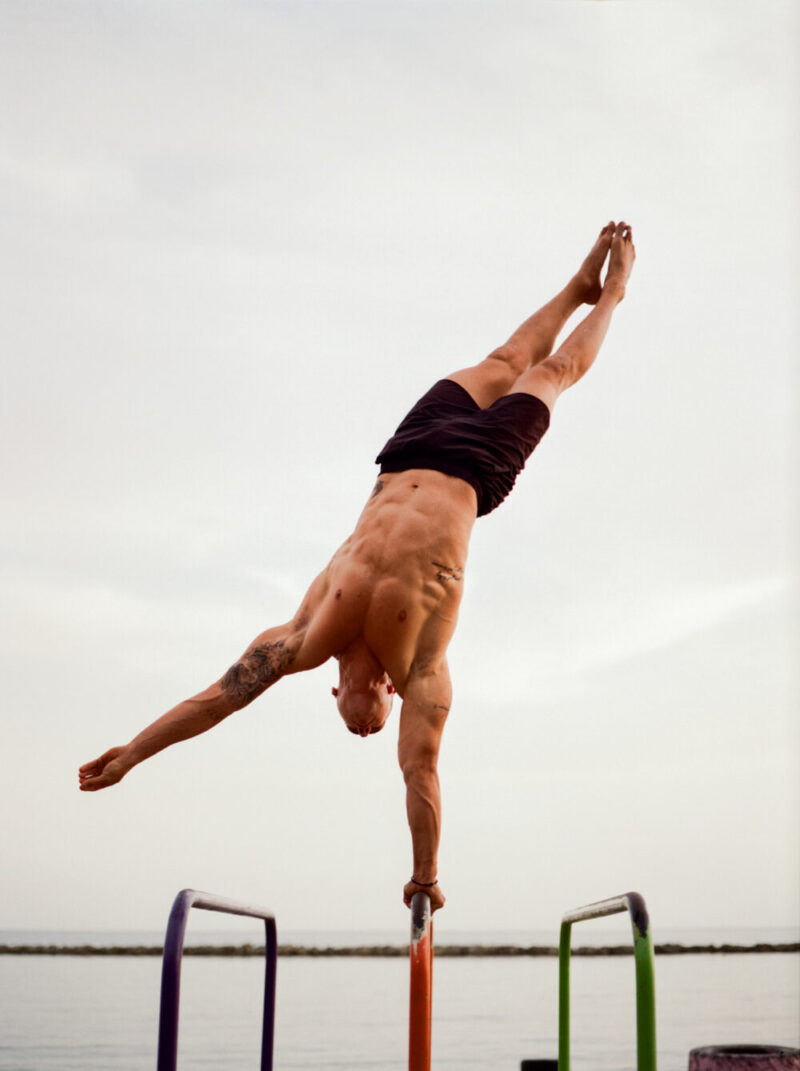
'Power Beach', 2026
The Body as Sculptural Form
Throughout the twentieth century, artists increasingly explored the sculptural qualities of the human body. Sculptors such as Auguste Rodin approached the body not as a static ideal but as a dynamic structure shaped by tension, gesture, and fragmentation.
Photography similarly began to treat the body as form. In the work of photographers such as Robert Mapplethorpe and Herb Ritts, the human figure appears almost sculptural, carefully composed studies of musculature, line, and proportion.
In these images, the body functions less as a portrait and more as architecture: a structure defined by balance, movement, and equilibrium.
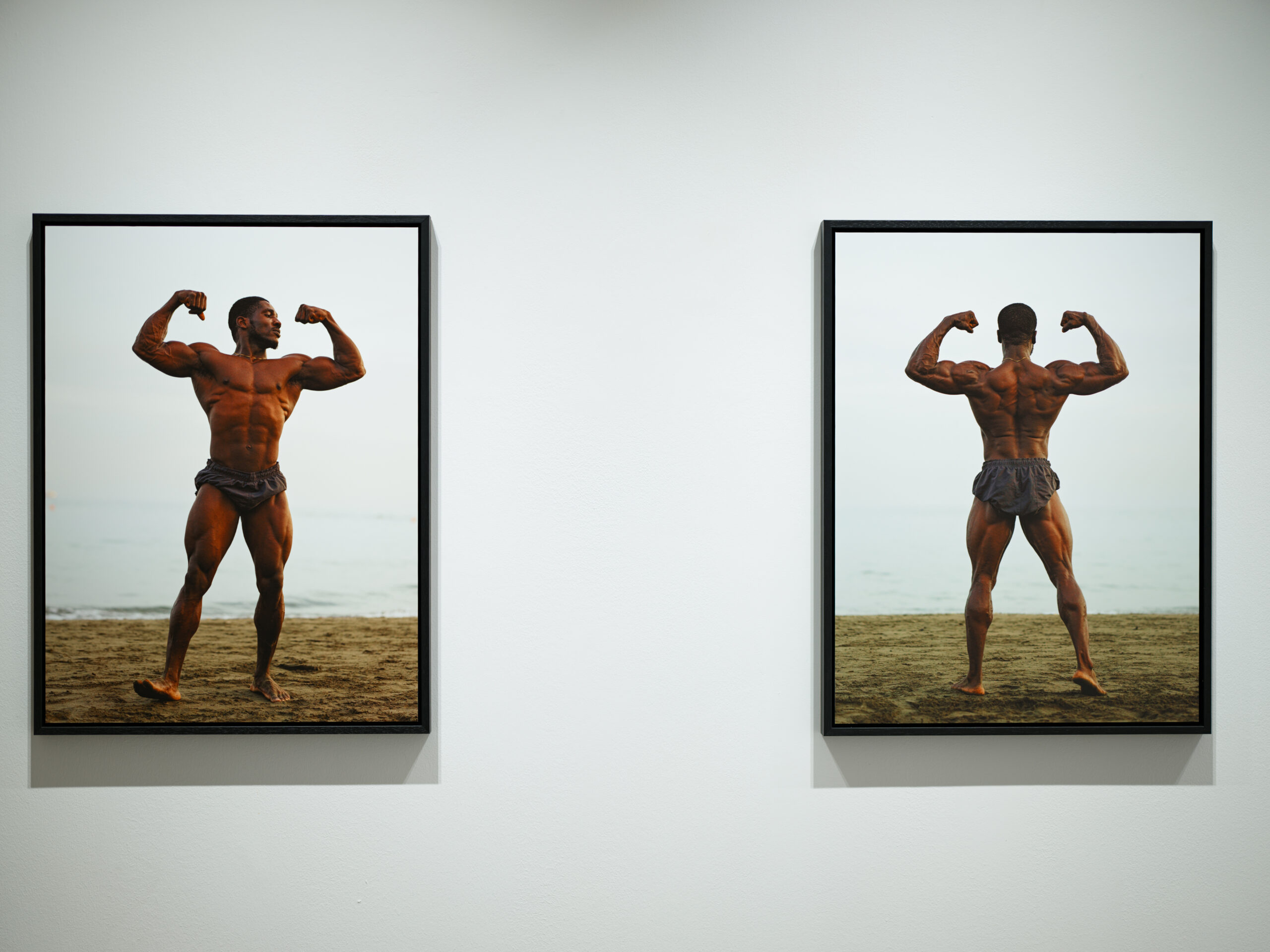
(left) 'Power Beach_Front2', 2026 |(right) 'Power Beach_Back2', 2026
Body, Ritual, and Presence
Other photographic practices have approached the athletic body through the lens of ritual and physical culture. In The Last of the Nuba, photographer Leni Riefenstahl documented the ceremonial wrestling traditions of the Nuba people, producing images in which the human body becomes both cultural symbol and sculptural form.
Across these diverse approaches, the athletic body emerges as a powerful visual subject, one capable of revealing both the physical mechanics of movement and the aesthetic qualities of form.
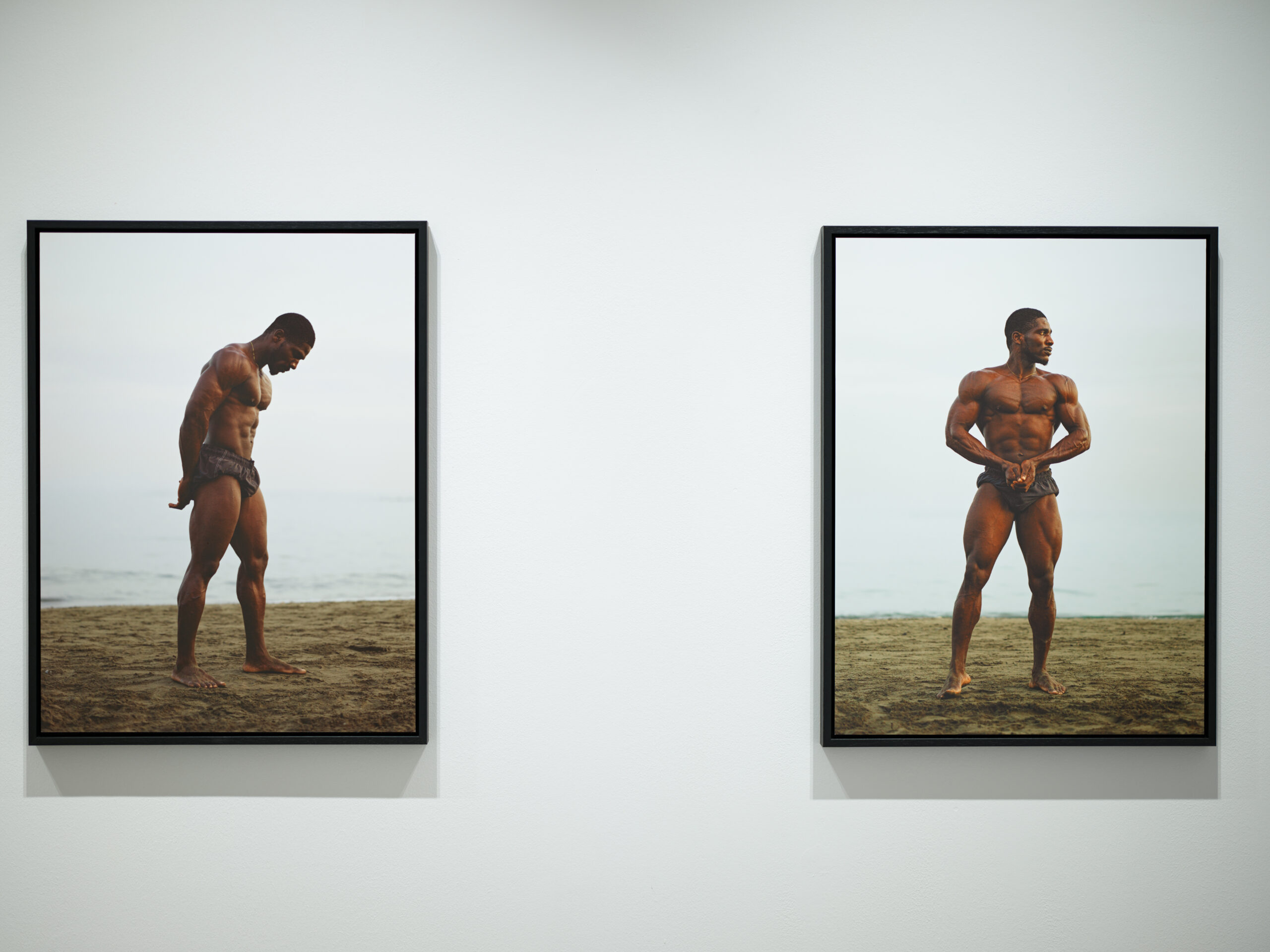
(left) 'Power Beach_Front', 2026 | (right) 'Power Beach_Side', 2026
A Contemporary Continuation: Power Beach
It is within this longer visual tradition that the Power Beach series by Christos Hadjichristou can be situated.
Photographed at Dasoudi Beach in Limassol, the series captures athletes during moments of training against the open horizon of the sea. Removed from the controlled environment of a gym or stadium, the athletes appear within a minimal landscape where posture, balance, and physical tension become the primary visual elements.
The horizontal line of the sea functions as a stabilising axis within the composition. Against this quiet backdrop, the bodies introduce diagonals, arcs, and vertical tensions, transforming gestures of athletic training into sculptural configurations.
Seen together, the photographs reveal how everyday moments of discipline and concentration can become studies of form, movement, and equilibrium. Encountered in the gallery space, these images invite viewers to reconsider the athletic body not only as a symbol of strength, but as a structure through which photography continues to explore one of art’s most enduring subjects: the human body in motion.
Power Beach by Christos Hadjichristou is currently on view at The Edit Gallery.
Selected References
- Polykleitos, Doryphoros (Spear Bearer), c. 440 BCE. Classical Greek sculpture establishes principles of proportion, balance, and contrapposto in the representation of the athletic body.
- Eadweard Muybridge, Animal Locomotion, 1887. Sequential photographic studies analysing human and animal movement.
- Étienne-Jules Marey, chronophotography experiments, 1880s. Early photographic techniques were used to study movement and the mechanics of the body.
- Auguste Rodin, sculptural studies of the human figure, late 19th–early 20th century, exploration of gesture, tension, and the expressive potential of the body.
- Robert Mapplethorpe, photographic studies of the human body, 1970s–1980s. Images that emphasise the sculptural qualities of musculature and form.
- Herb Ritts, photographic portraits and figure studies, 1980s–1990s. Photographs that draw on classical ideals of proportion and the aesthetics of the athletic body.
Subscribe to our mailing list to receive news for upcoming shows, valuable insights and useful tips on collecting art
We will process the personal data you have supplied in accordance with our privacy policy.