
Between Irony and Existentialism: Contemporary Painting Today
Between Irony and Existentialism: Contemporary Painting Today
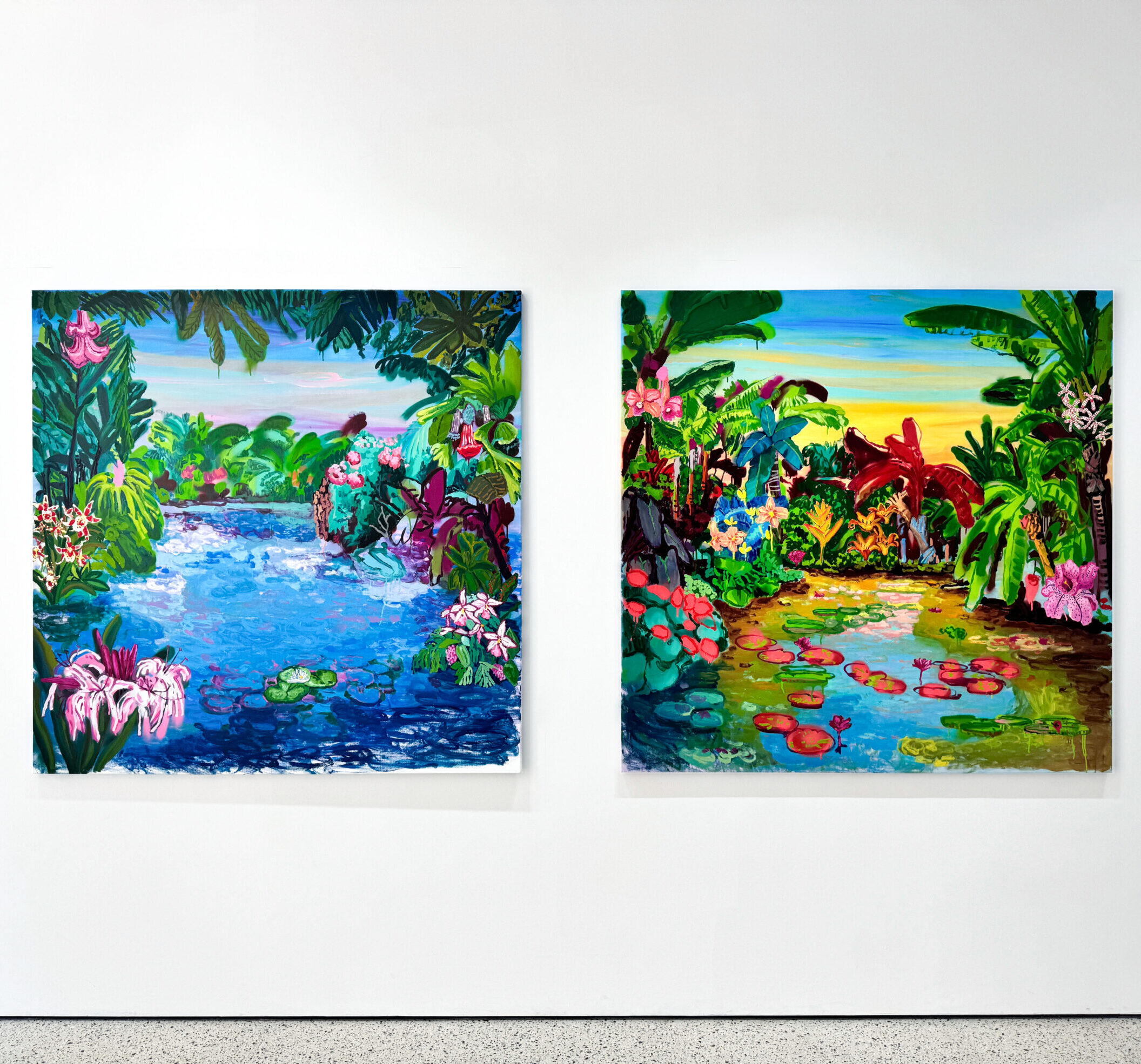
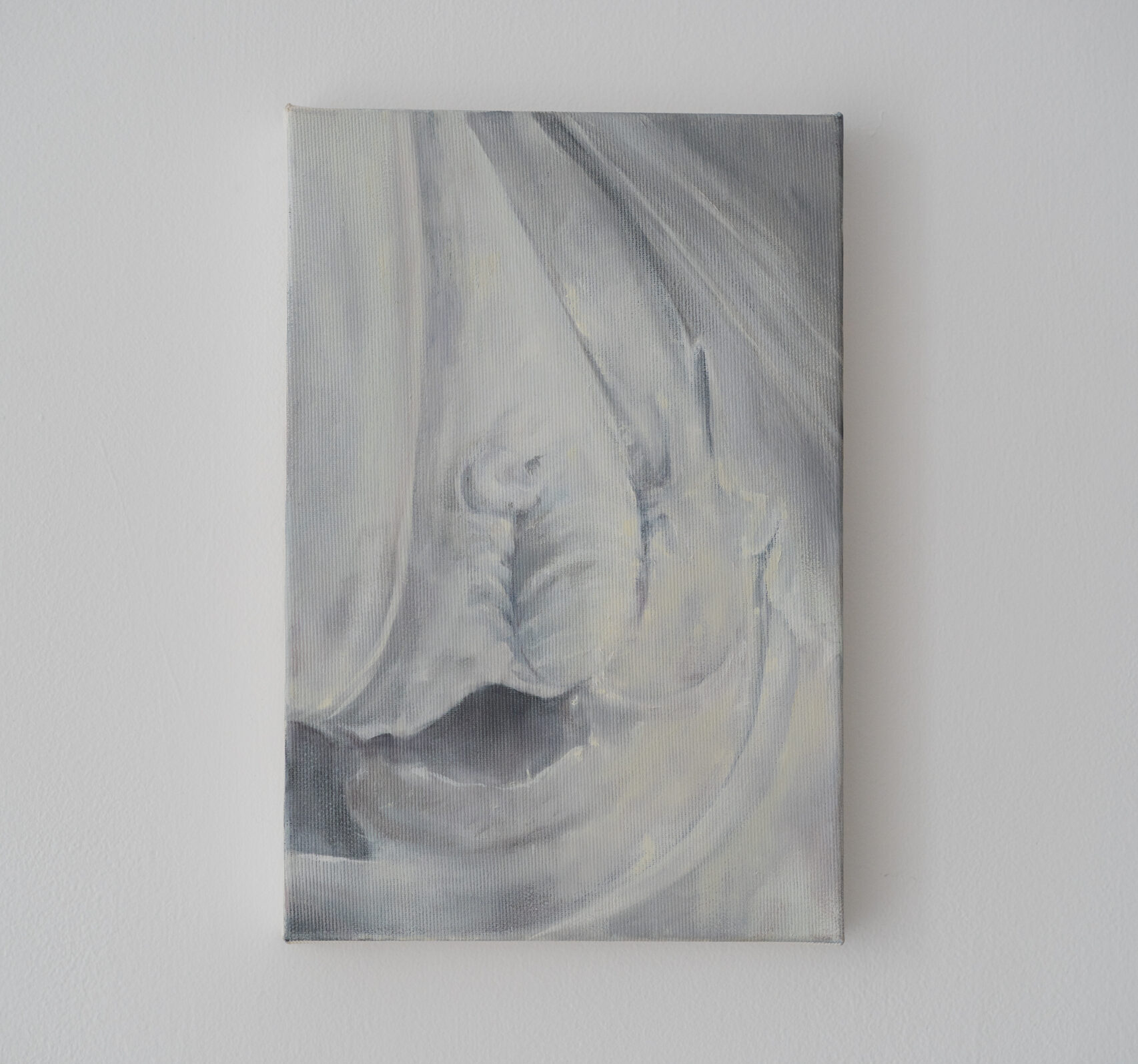
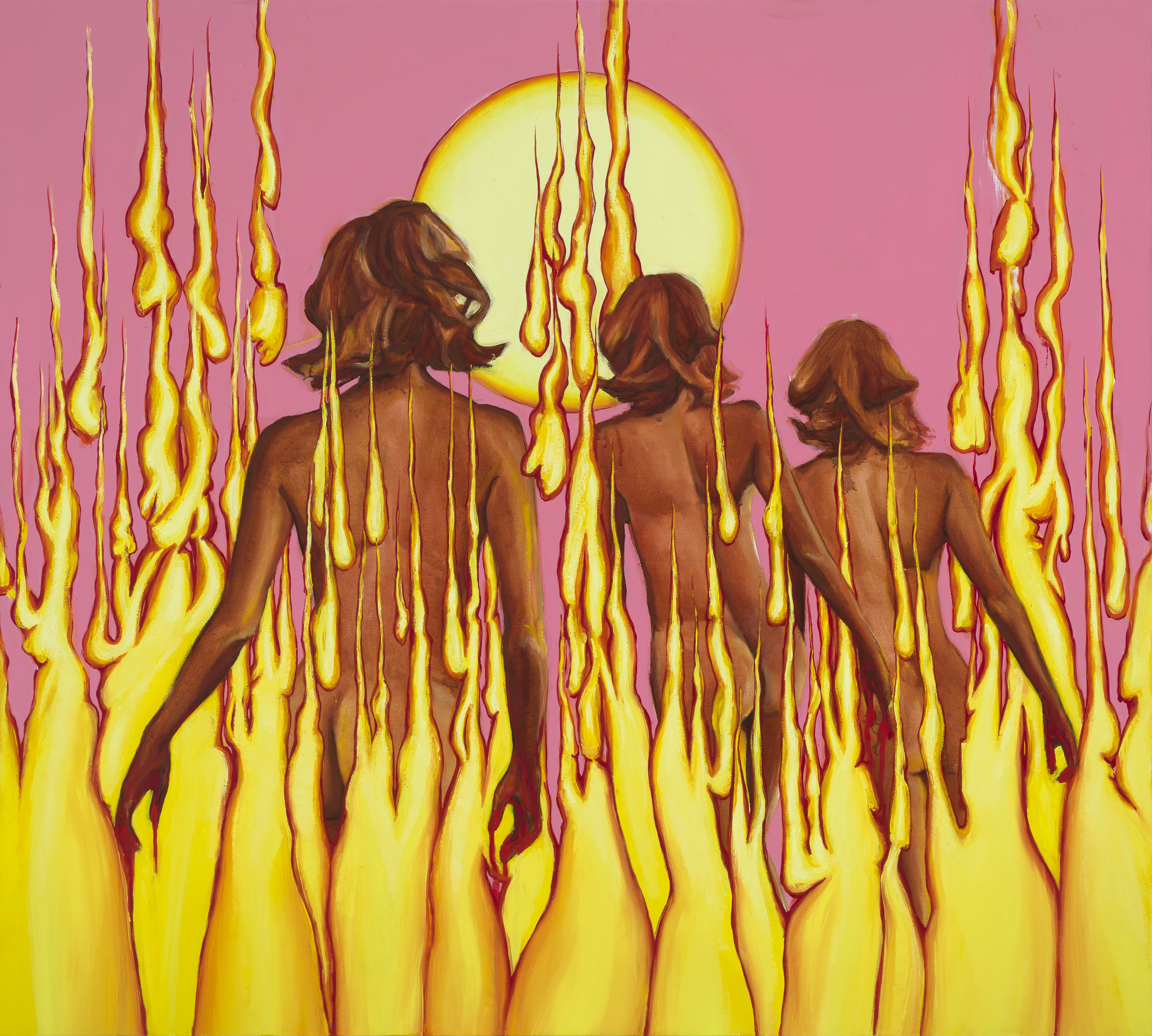
Contemporary painting today increasingly moves between irony, absurdity, and existential reflection. Rather than offering fixed meanings or direct social commentary, many artists are creating fragmented psychological landscapes that mirror the instability and contradictions of contemporary life. Humour coexists with discomfort, familiarity with uncertainty, and sincerity with satire. Within this shifting territory, painting becomes less about providing answers and more about opening spaces for ambiguity, interpretation, and reflection.
The Legacy of the Absurd
Historically, movements like Dada and Surrealism used humour and irrationality to challenge social and cultural structures during periods of political instability and collective uncertainty. Contemporary painting revisits similar territory, though often in quieter and more psychological ways. The absurd no longer appears simply as rebellion, but as a way of navigating a reality that increasingly feels fragmented and unstable.
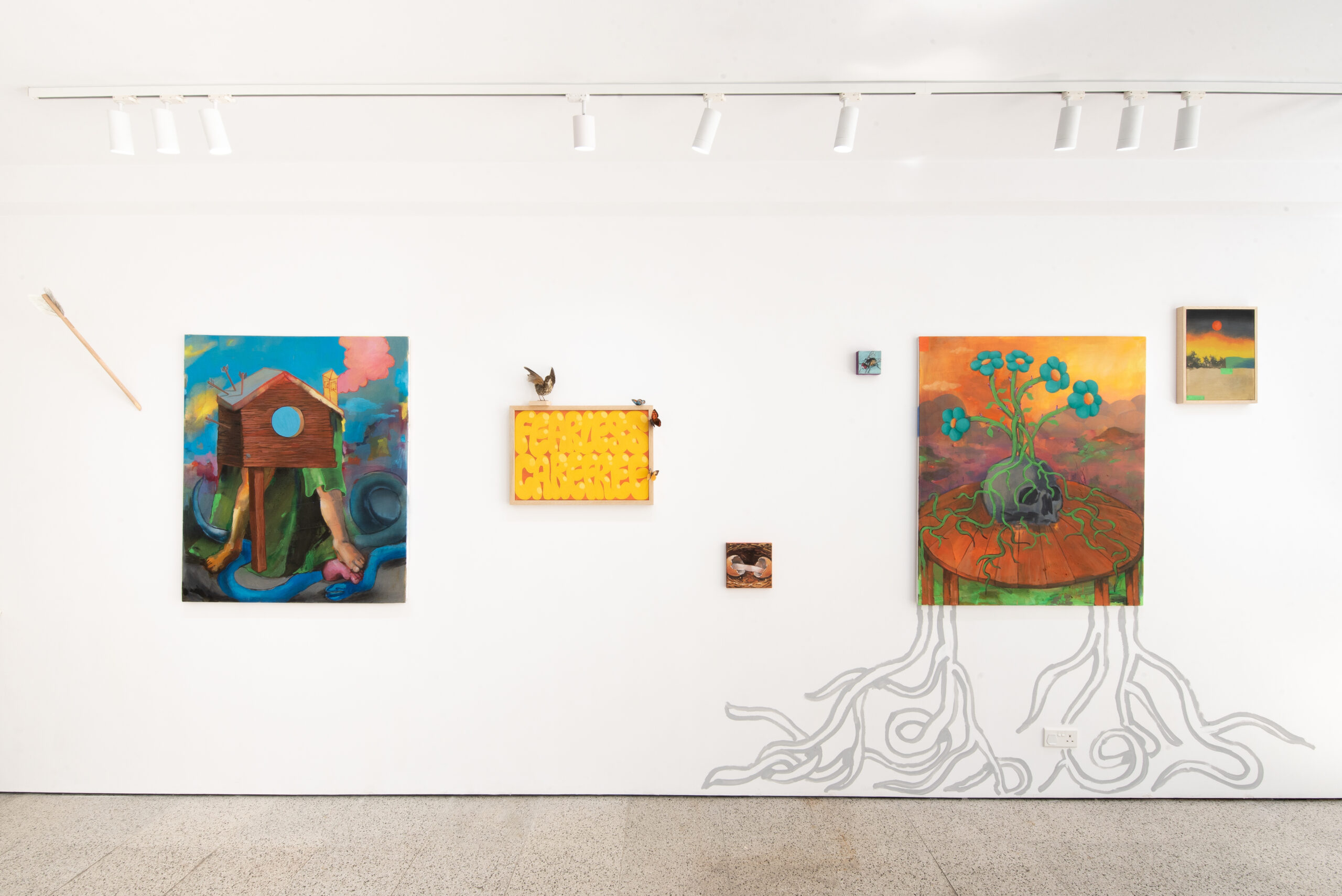
installation view
Humour as Psychological Tension
In contemporary painting, humour frequently operates less as entertainment than as a source of tension. Beneath satire often lies vulnerability, anxiety, and existential unease. Artists such as George Condo use distorted figures and fragmented compositions to explore the instability of identity, perception, and contemporary consciousness. Within these works, humour and psychological tension coexist, creating images that feel simultaneously theatrical, absurd, and deeply human.
The viewer is often left uncertain whether to laugh, reflect, or feel unsettled, and perhaps this ambiguity is precisely the point.
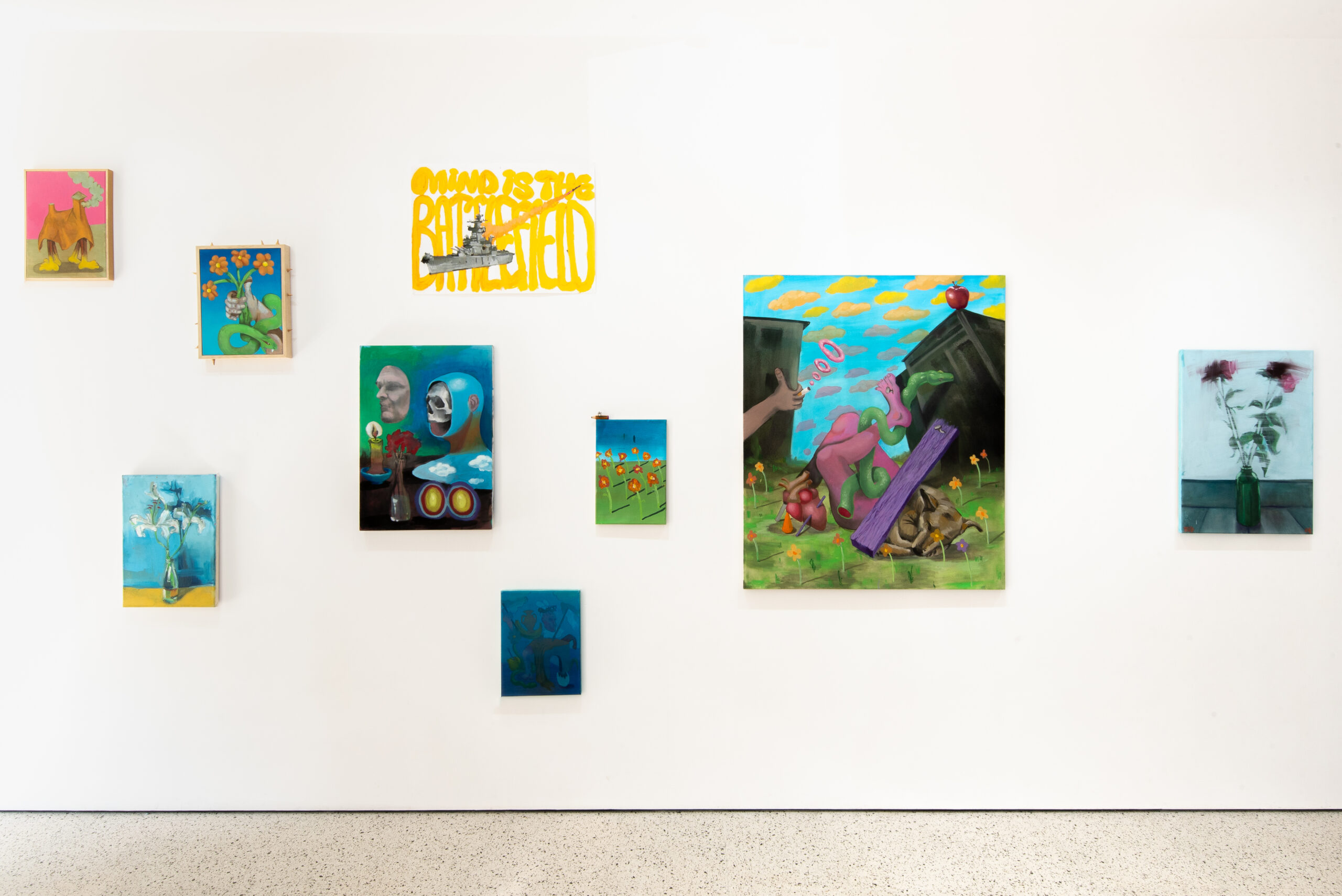
installation view
Fragmented Perspectives
Many contemporary painters are also abandoning fixed spatial logic altogether. Perspective shifts unpredictably, compositions become theatrical, and figures appear suspended somewhere between reality and fiction. These fragmented visual structures mirror the way contemporary life itself is increasingly experienced through overlapping narratives, unstable realities, and constant image consumption. Rather than functioning as straightforward representations, these paintings create emotional and psychological environments where meaning remains fluid and unresolved.
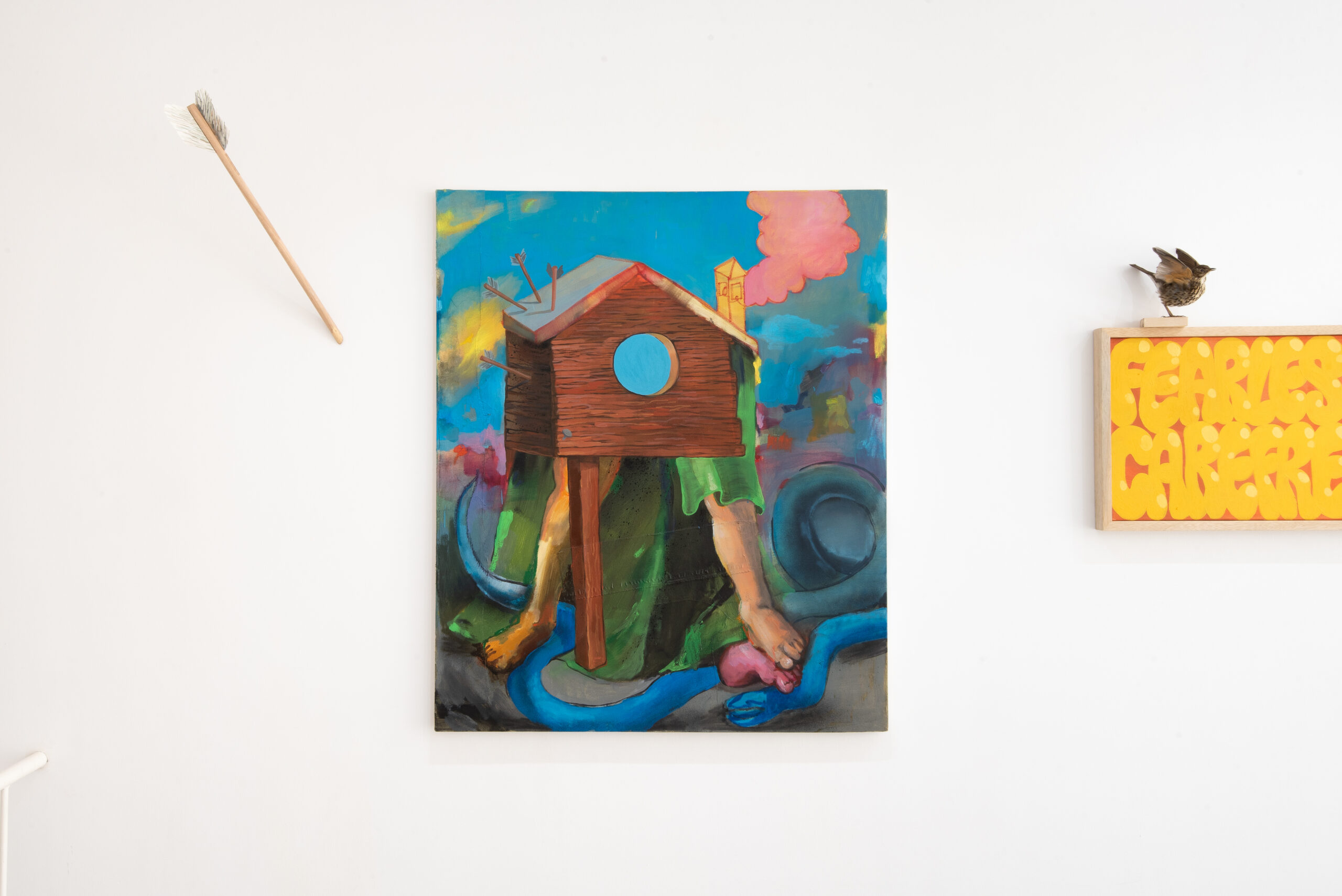
installation shot
The Return of Ambiguity
This growing embrace of ambiguity also reflects a broader fatigue with certainty. Increasingly, contemporary artists seem less interested in delivering clear conclusions and more interested in creating spaces where contradiction, instinct, and interpretation can coexist. Meaning no longer arrives as something fixed, but as something unstable, shifting, and deeply personal. The works invite viewers to participate in the construction of meaning rather than simply consume it.
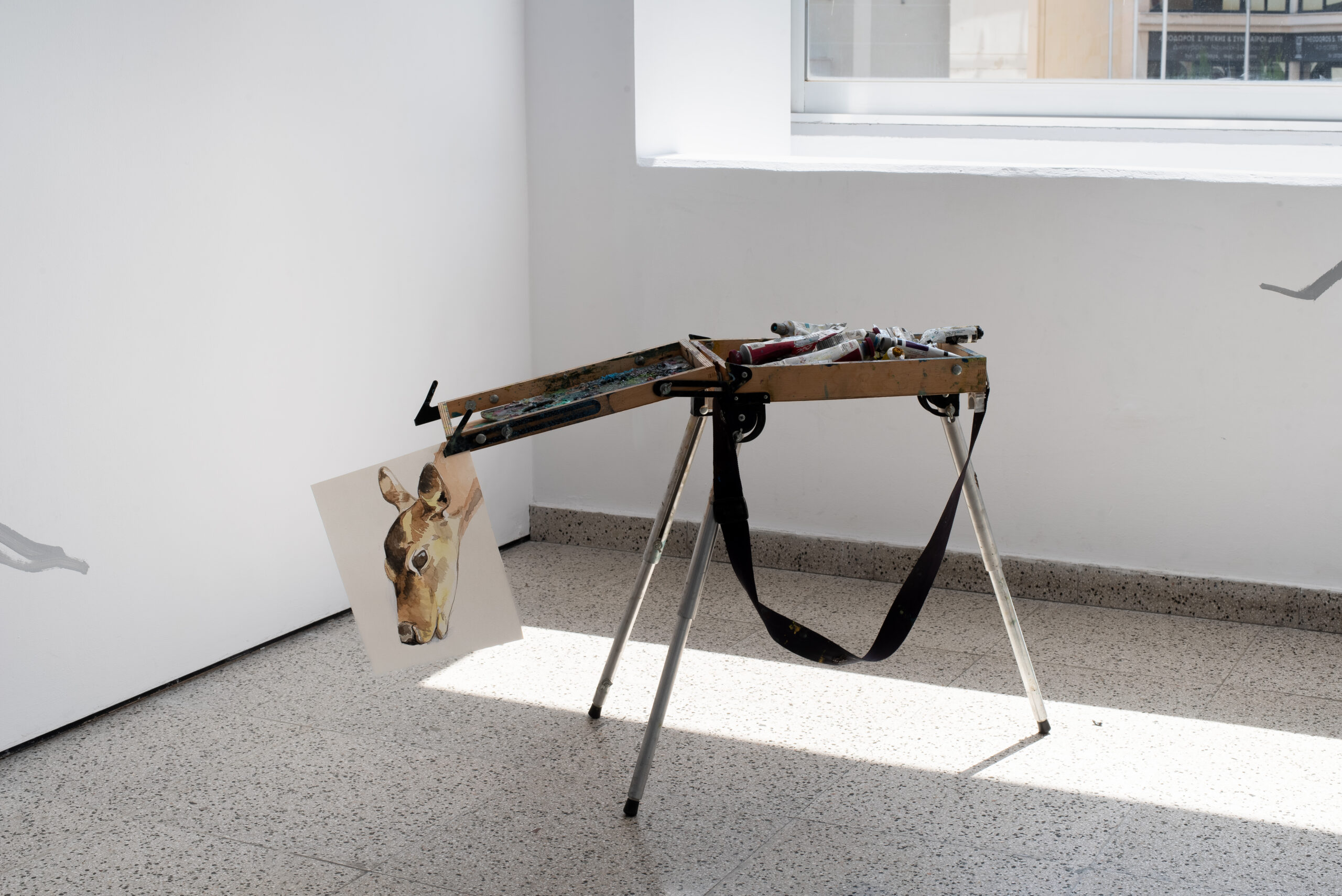
installation shot
The Greatest Nation Ever
These ideas unfold throughout The Greatest Nation Ever, Yeti’s current solo exhibition at The Edit Gallery. Moving between satire, absurdity, and psychological tension, the exhibition constructs a world that feels both fictional and strangely familiar. Rather than offering direct statements about the world or attempting to answer existential questions, the works instead invite viewers into a space of uncertainty and reflection. There is no single narrative or fixed interpretation to follow. Meaning remains open, shifting between irony and sincerity, familiarity and discomfort, encouraging viewers to navigate their own emotional and psychological responses within these unstable yet deeply human worlds.
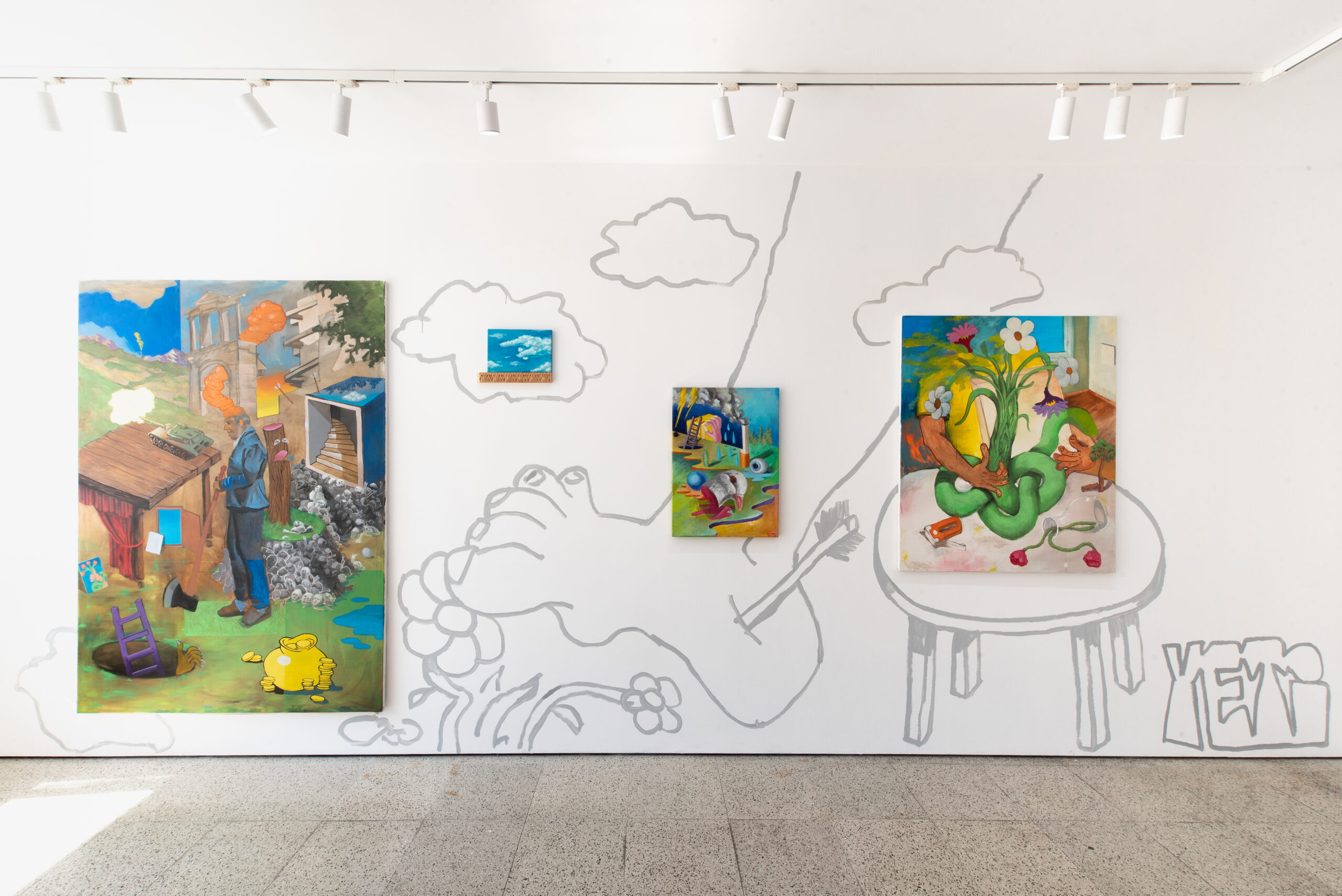
installation view
Perhaps this is precisely what makes much contemporary painting feel so relevant today. In a world increasingly shaped by contradiction, overstimulation, and uncertainty, artists are no longer attempting to simplify reality or provide definitive answers. Instead, they create spaces where humour, discomfort, ambiguity, and reflection can coexist. Contemporary painting becomes less about certainty and more about experience, inviting viewers not to decode a single meaning, but to confront their own interpretations, emotions, and existential questions within the work itself.
The Greatest Nation Ever by Yeti is currently on view at The Edit Gallery.
Selected References
Subscribe to our mailing list to receive news for upcoming shows, valuable insights and useful tips on collecting art
We will process the personal data you have supplied in accordance with our privacy policy.