When Entertainment Becomes an Act of Rebellion:
Art, Spectacle and Subversion
When Entertainment Becomes an Act of Rebellion: Art, Spectacle and Subversion
How artists transform popular culture into a means of questioning conventions, challenging established narratives and reimagining the world around us.
Cinema, music and popular imagery have long shaped how we perceive the world. Beyond entertainment, they construct ideals, reinforce cultural values and influence collective identities. Throughout art history, artists have appropriated these familiar visual languages, transforming them into tools of artistic experimentation and social critique.
From Pop Art to the Situationist International and the visual culture of punk, the relationship between art and entertainment has been one of both fascination and resistance.
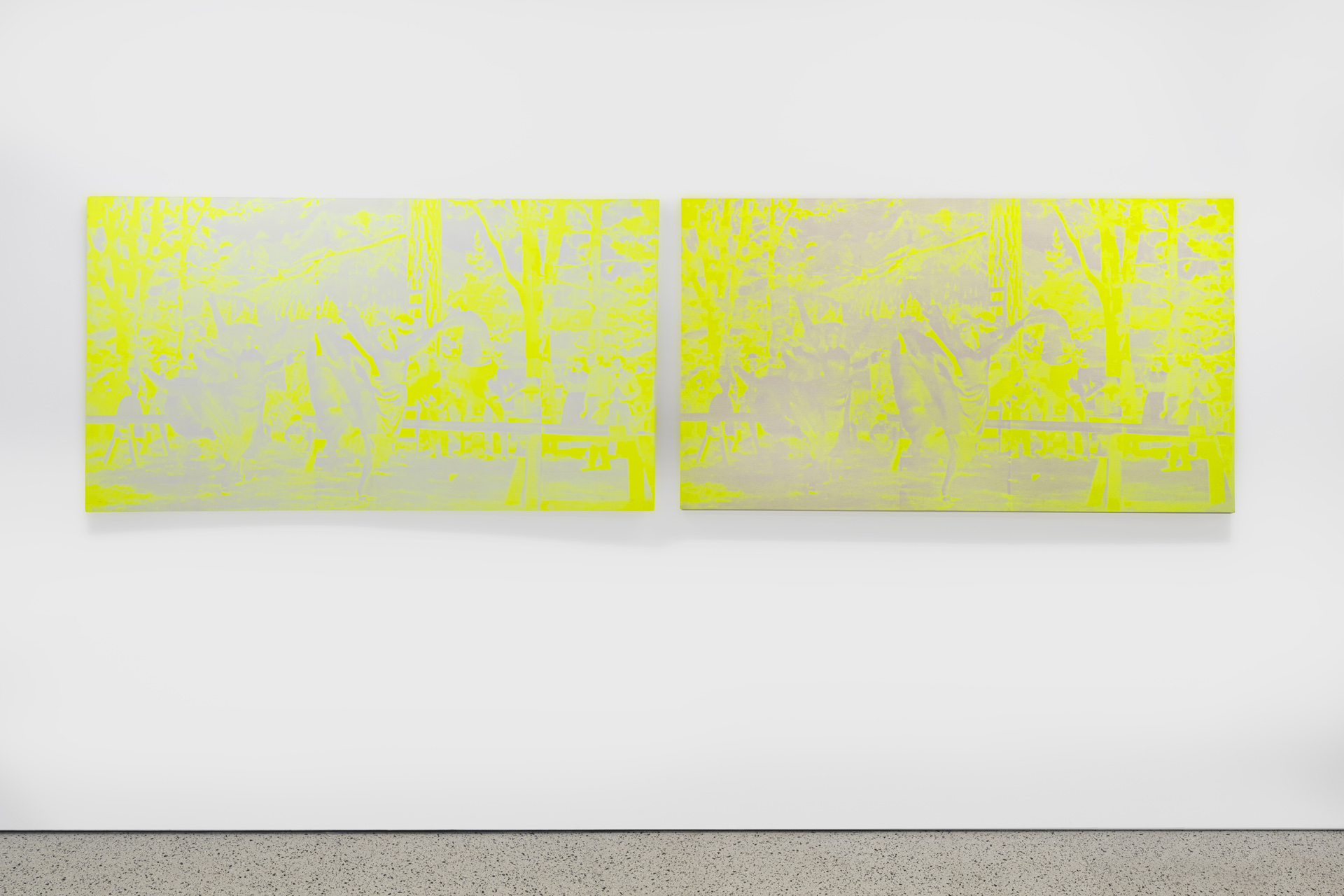
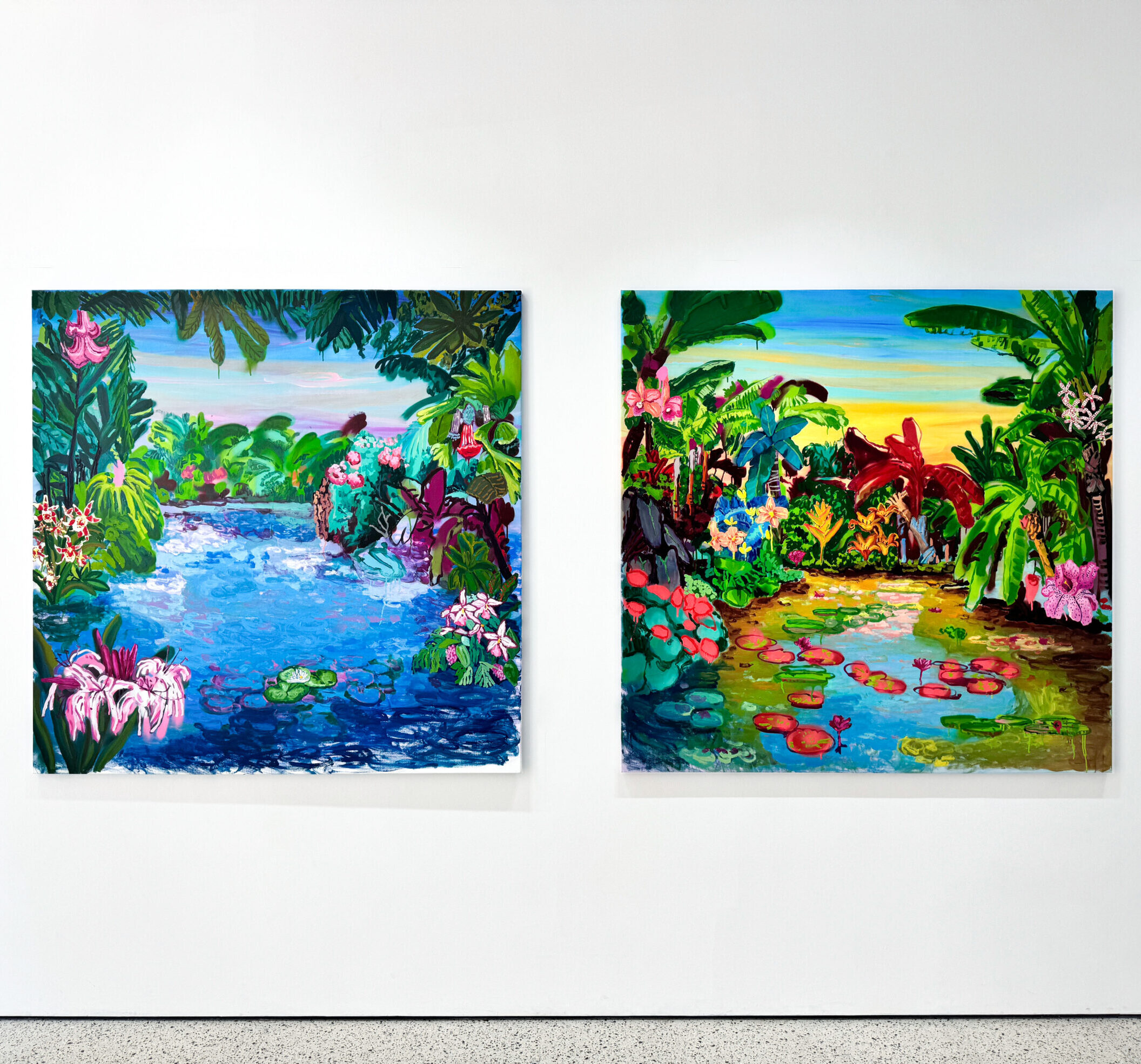
(left) The Barn Dance I 1954, 2026 (right) The Barn Dance II 1954, 2026
Popular Culture as Artistic Material
Pop Art’s emergence in the 1950s challenged traditional distinctions between fine art and popular culture. Artists such as Richard Hamilton, Andy Warhol and Roy Lichtenstein incorporated advertisements, celebrities, comic strips, and consumer imagery into their work, questioning how images shape contemporary society.
Hamilton’s Just what is it that makes today’s homes so different, so appealing? (1956) presented an image of domestic life saturated with consumer culture, while Warhol’s repeated portraits of Marilyn Monroe transformed a Hollywood icon into a meditation on celebrity and mass reproduction. Yet Pop Art’s relationship with consumer culture was often ambiguous, reflecting both fascination with and critical distance from the imagery it depicted.
Around the same period, the Situationist International developed a more explicitly political critique of visual culture. In The Society of the Spectacle (1967), Guy Debord argued that social relationships were increasingly mediated through images and representations. Earlier, in A User’s Guide to Détournement (1956), Debord and Gil J. Wolman explored how they could reuse existing cultural material to challenge its established meaning. Such strategies revealed how images influence not only what we see, but also how we understand ourselves and the society around us.

Punk and the Aesthetics of Rebellion
The emergence of punk in the 1970s introduced a more confrontational form of cultural resistance. Its visual language, characterised by collage, fragmentation, provocative typography and DIY production, challenged established ideas of taste, authority and artistic expression.
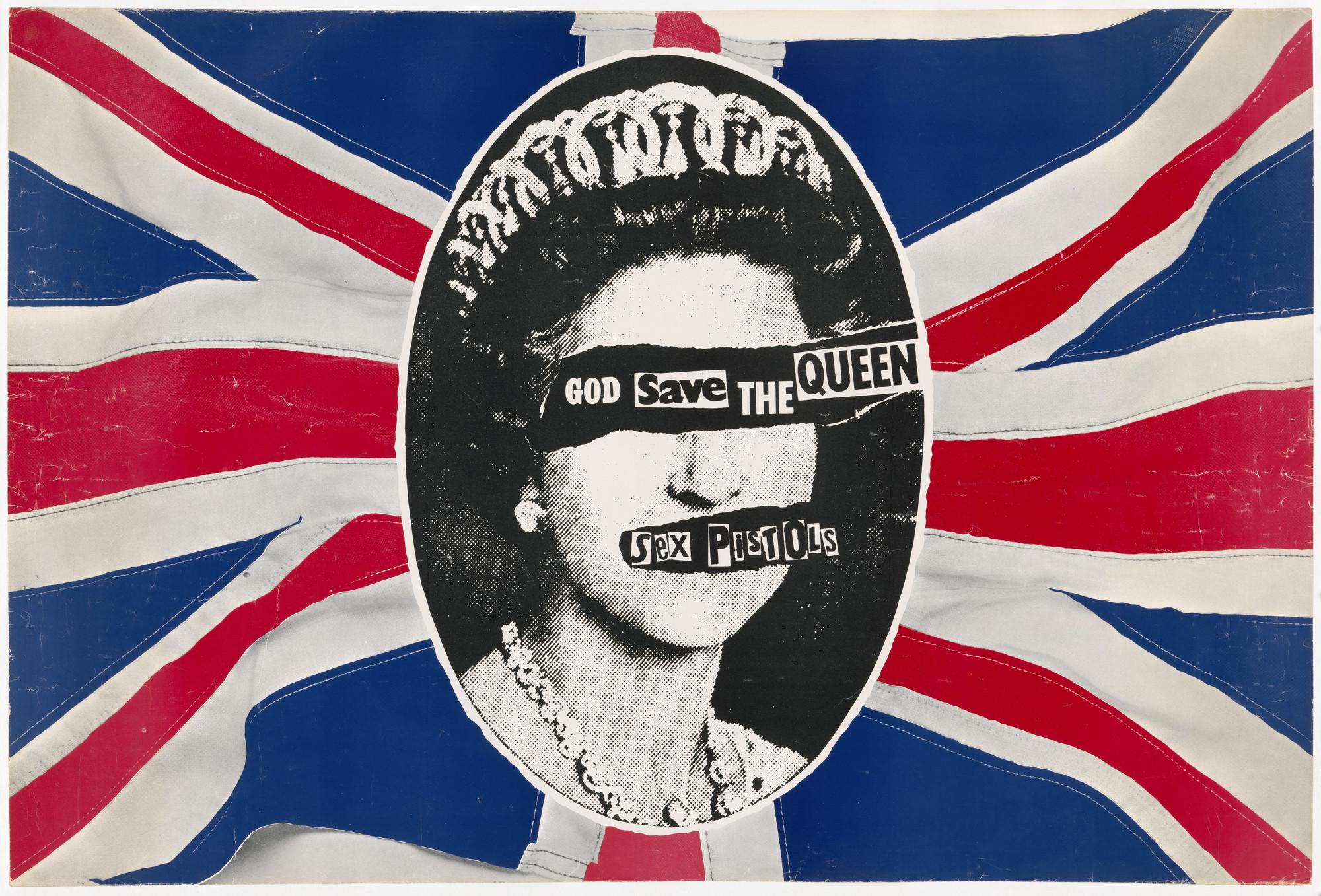
In his design for the Sex Pistols’ God Save the Queen (1977), Jamie Reid obscured the eyes and mouth of Queen Elizabeth II with cut-out lettering, transforming an official royal portrait into an image of anti-establishment defiance. A familiar symbol of authority became the material through which that authority was questioned.
Beyond its distinctive aesthetic, punk challenged the boundaries between art, music and everyday life, favouring immediacy, participation and independent expression over established conventions.
Yet rebellion has always maintained a complicated relationship with the culture it seeks to challenge. Once absorbed into mainstream entertainment, even the most radical gestures risk becoming familiar styles, reproduced and consumed as part of the very system they originally opposed. This tension raises an enduring question within contemporary art: can an image retain its critical force when it becomes part of the spectacle? Or does its subversive potential lie precisely in its ability to circulate, acquire new meanings, and reach audiences beyond its original context?
Between Hollywood Musicals and Punk Culture
This relationship between entertainment and subversion finds a contemporary expression in Evelyn Anastasiou’s TWELFTH NIGHT, presented at The Edit Gallery in Limassol.
Bringing together the carefully choreographed optimism of post-war Hollywood musicals and the raw energy of contemporary punk culture, Anastasiou explores two seemingly opposing forms of expression. While the musical constructs an alternative reality through fantasy and spectacle, punk confronts reality through disruption and defiance. Yet both possess the ability to interrupt everyday experience and challenge established conventions.
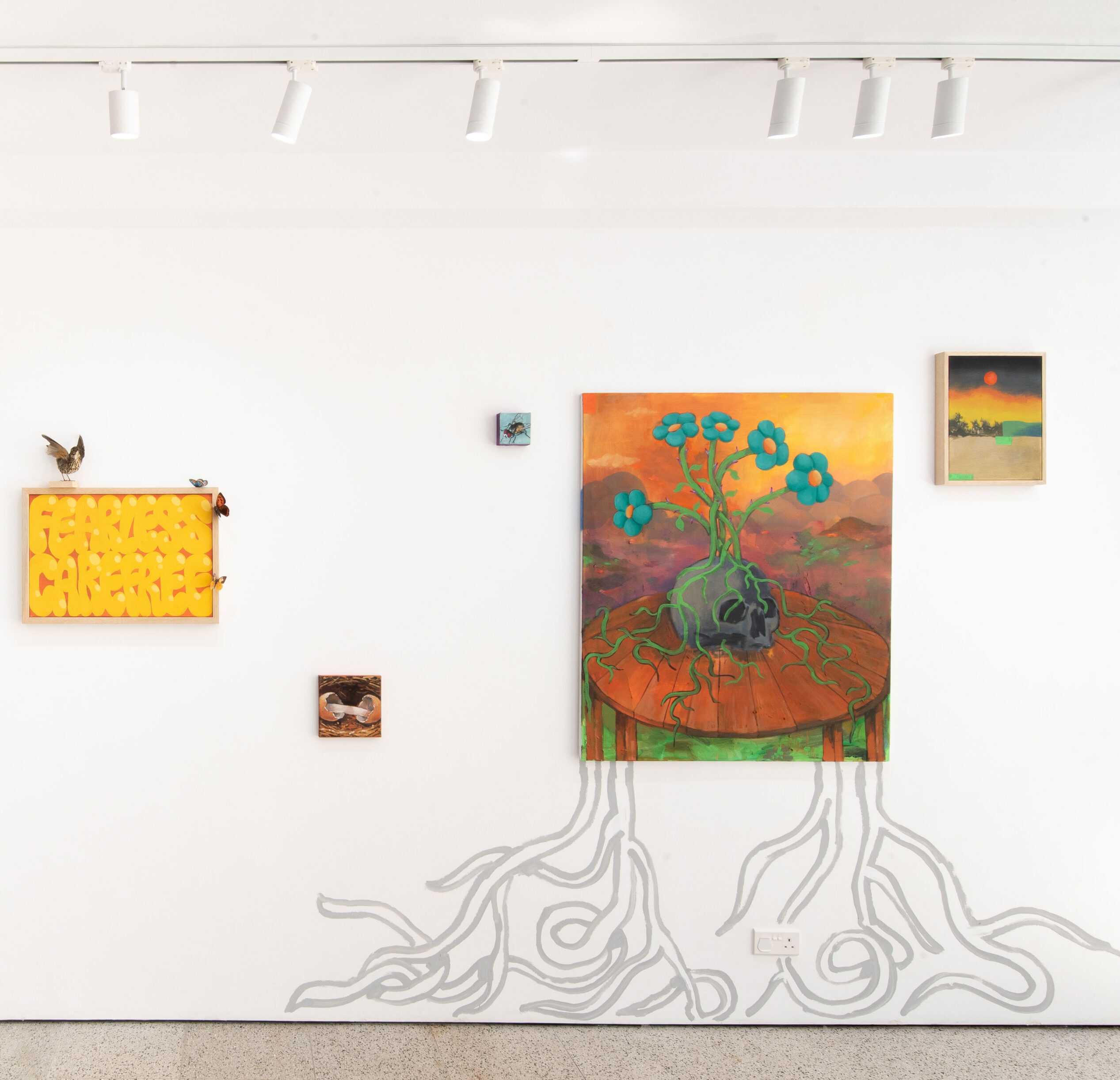
Working across painting, photography and installation, Anastasiou transforms cultural material into new visual forms. In The Barn Dance I and II, cinematic imagery is reworked through screenprinting and painting, with the two compositions recalling consecutive film stills. The choice of materials is significant: screenprinting recalls the reproducibility of mass-media imagery, while painting introduces a physical intervention into the cinematic image. Elsewhere, punk set lists reproduced on stone transform fleeting musical performances into enduring objects. Traditionally associated with monuments and historical inscriptions, stone lends an unexpected permanence to these temporary records of collective experience.
The exhibition’s title draws on Shakespeare’s Twelfth Night and the festive tradition of misrule associated with it, when disguise and temporary reversals of social roles unsettled established conventions. Within Anastasiou’s exhibition, this idea resonates with the encounter between the controlled spectacle of the musical and punk’s refusal of conformity.
Extending beyond the gallery, the exhibition’s opening brought together visual art, theatre and live music, including a performance by Finnish punk band HAUTAUSTOIMISTO, turning these ideas into a collective experience.
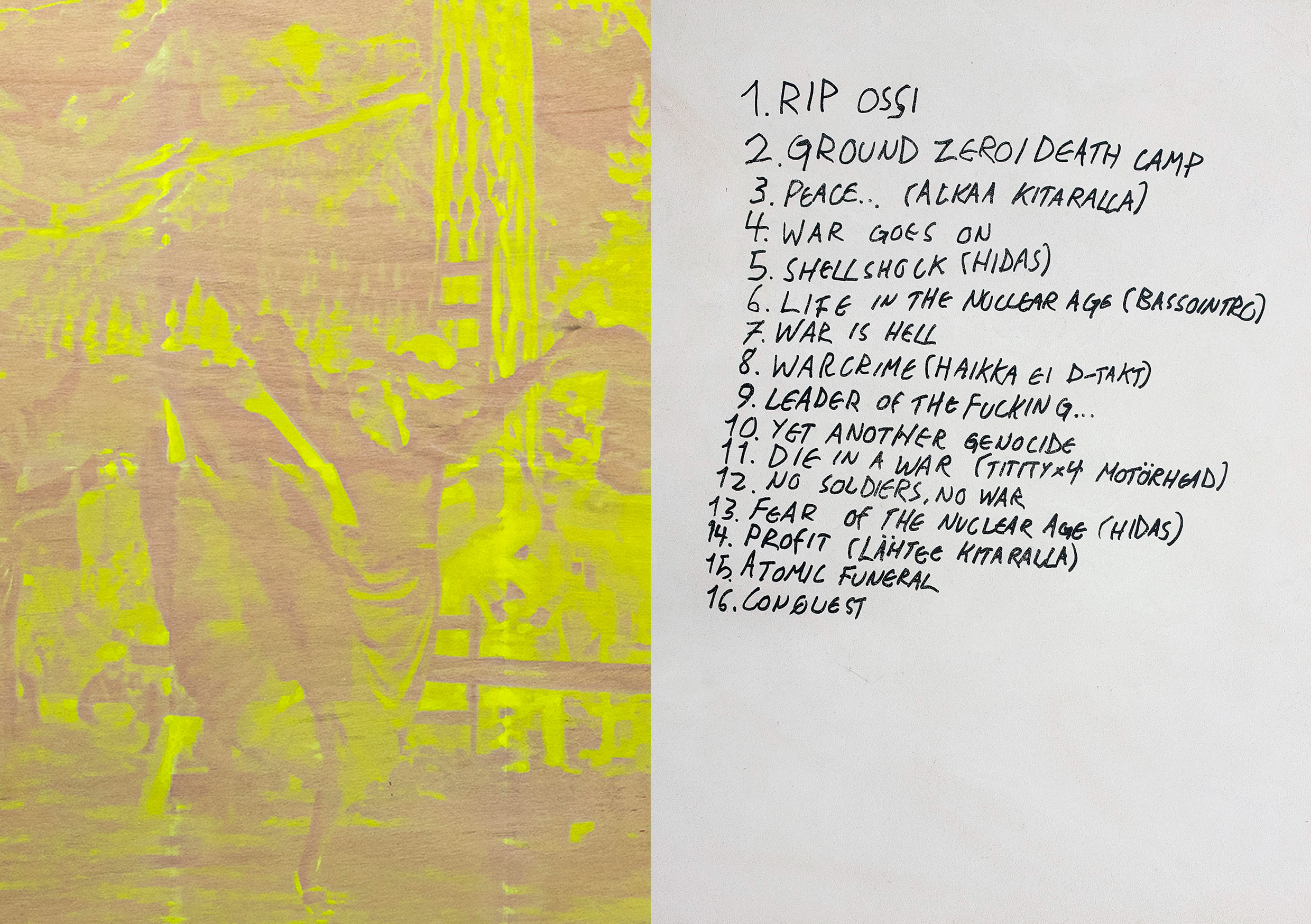
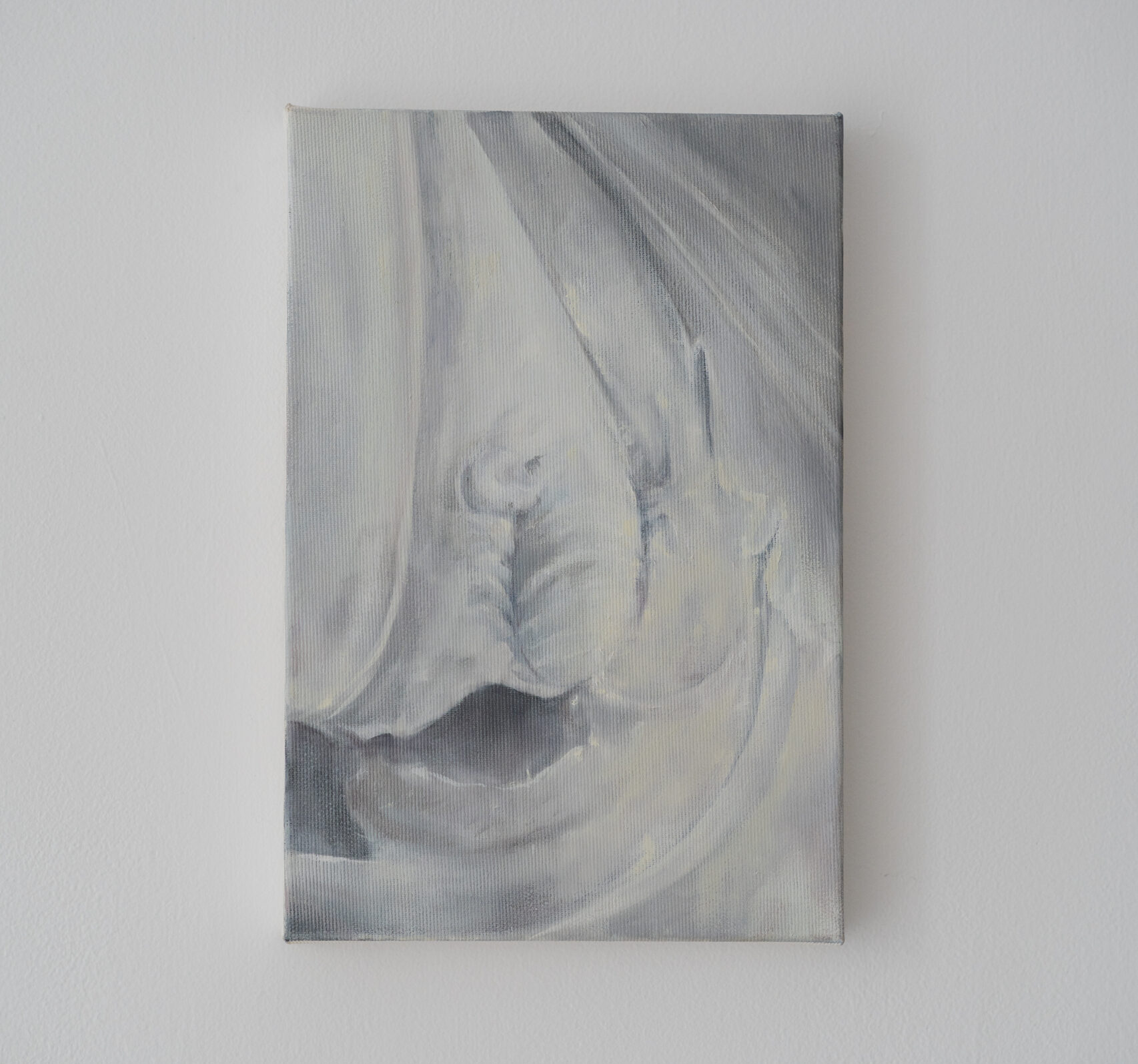
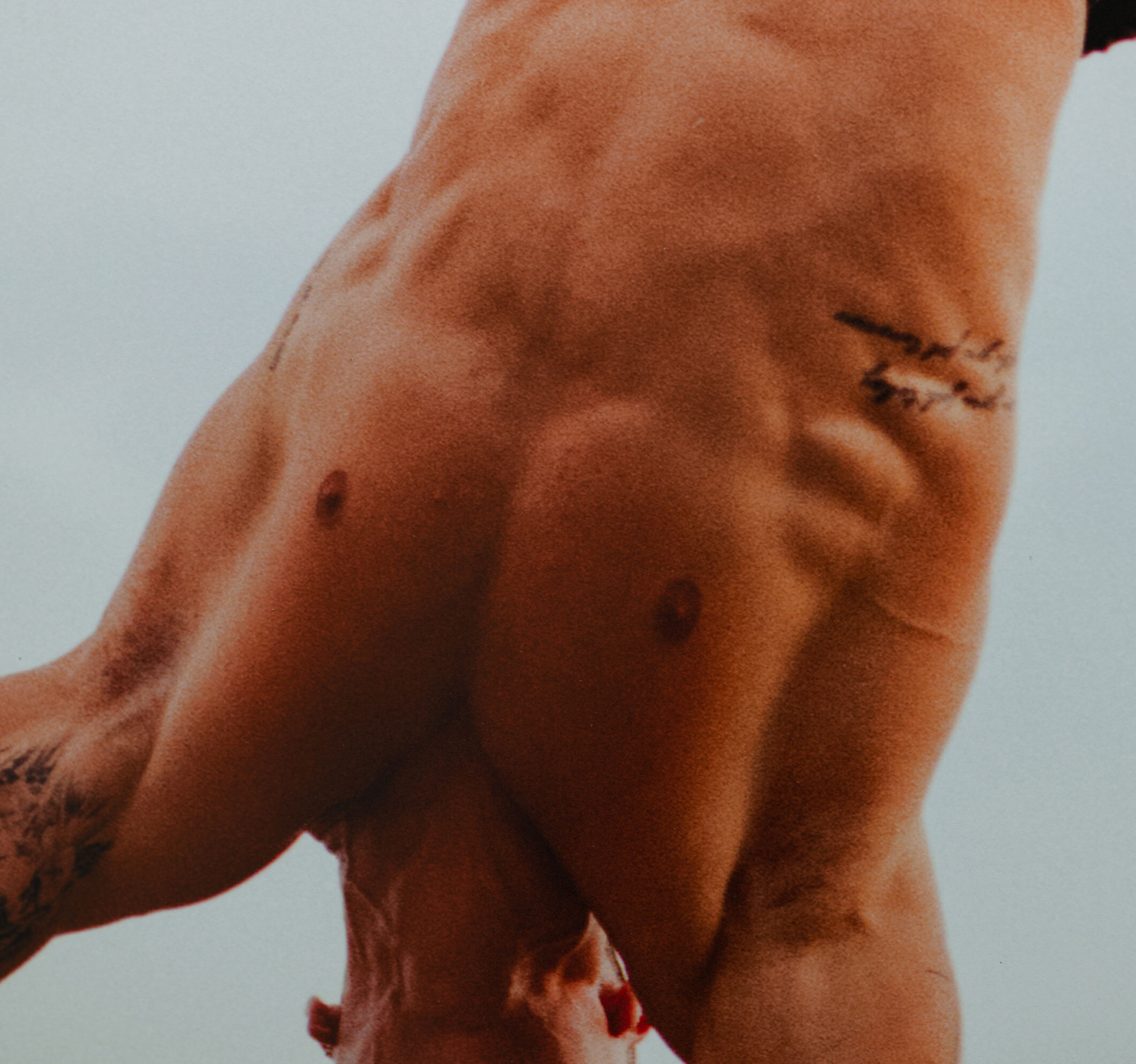
(left) Detail of Barn Raising 1954, 2026 (right) Set List of Disappoint Band, Jyväskylä, Finland, 2026
The Power of Reimagining the Familiar
Popular imagery does not carry fixed meanings. Through appropriation, repetition, and transformation, artists can expose its contradictions and invite us to reconsider what we take for granted.
In TWELFTH NIGHT, Anastasiou brings cinematic illusion and punk rebellion into dialogue without attempting to resolve their contradictions. The optimism of the Hollywood musical and the defiance of punk offer different responses to social reality, yet both depend on performance, collective experience, and the possibility of temporarily suspending everyday conventions.
Rather than positioning entertainment and resistance as opposites, the exhibition invites us to consider their complicated relationship. If rebellion can become spectacle, perhaps spectacle can also become a space for questioning the world it appears to celebrate.
Twelfth Night by Evelyn Anastasiou is currently on view at The Edit Gallery.
Bibliography
Subscribe to our mailing list to receive news for upcoming shows, valuable insights and useful tips on collecting art
We will process the personal data you have supplied in accordance with our privacy policy.